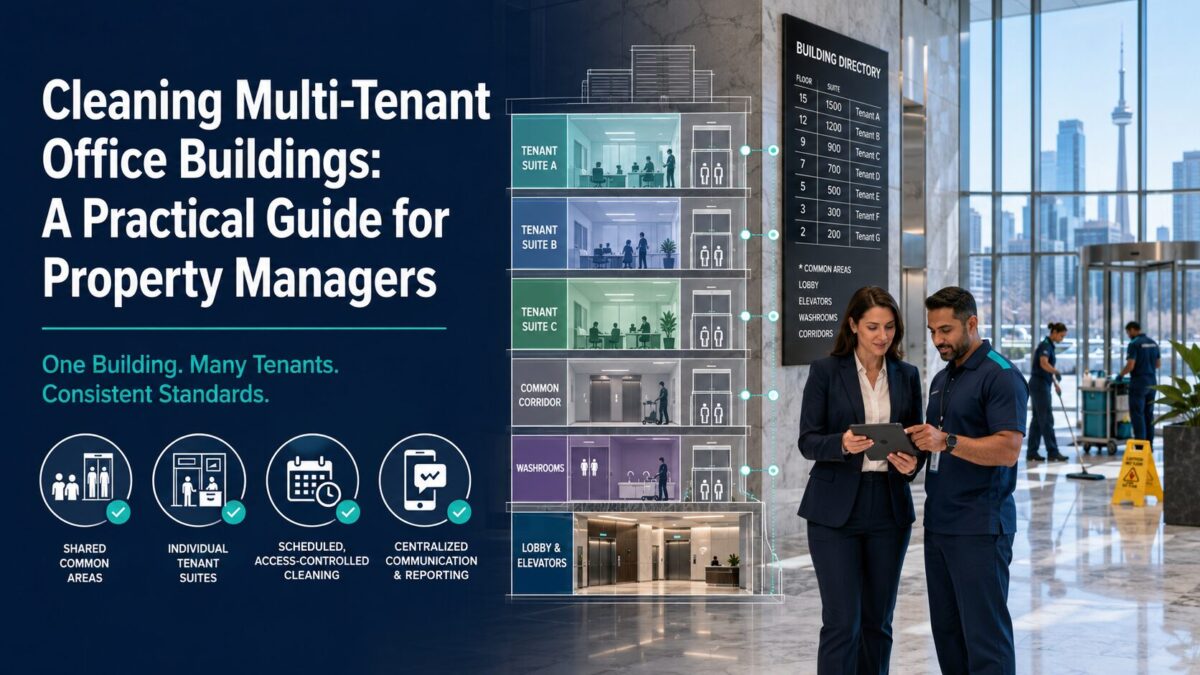
Cleaning Multi-Tenant Office Buildings: A Practical Guide for Property Managers
Managing a multi-tenant office building means balancing the needs of several businesses while keeping the property clean, professional, and welcoming. For property managers, landlords, and building operators, cleaning is not just a routine task. It plays a direct role in tenant satisfaction, building reputation, and day-to-day operations.
Unlike single-tenant spaces, multi-tenant properties require a cleaning plan that accounts for shared entrances, elevators, hallways, washrooms, offices, and common areas used by different people throughout the day. A well-organized approach helps maintain consistency, reduce complaints, and support a better experience for everyone in the building.
This guide explains what to include in a cleaning program for multi-tenant office buildings, with practical considerations for office building cleaning and property cleaning services GTA providers.
Why multi-tenant building cleaning needs a different approach
In a multi-tenant property, cleaning must support both shared spaces and individual tenant areas. These spaces often see higher traffic, more varied use, and different cleaning priorities from one tenant to another. A simple one-size-fits-all schedule usually is not enough.
Property managers need a plan that accounts for:
- Shared access points that must remain presentable throughout the day
- High-touch surfaces that need frequent attention
- Tenant-specific office spaces with different cleaning requirements
- Washrooms and common areas that experience steady use
- Coordinating cleaning with tenant schedules and security procedures
For multi-tenant building cleaning Toronto properties, the goal is to create a consistent standard that respects tenant privacy while keeping the building clean and professional.
Key areas to include in your cleaning plan
A strong cleaning program should cover every part of the building that affects the tenant and visitor experience. In office building cleaning, these are the areas that usually require the most attention.
Shared entrances and lobbies
The entrance is the first area people see when they arrive. It sets the tone for the entire building. Shared entrances and lobbies should be cleaned regularly to keep them bright, tidy, and free of visible dirt.
Cleaning tasks may include:
- Floor sweeping, vacuuming, and mopping
- Glass and door cleaning
- Dusting reception furniture and fixtures
- Removing litter and debris
- Cleaning mats and entry points
If your building has a reception area, the condition of this space can influence how tenants and visitors view the property as a whole.
Elevators and elevator lobbies
Elevators are among the most frequently used shared spaces in a multi-tenant building. Because they are touched by many people throughout the day, they need regular cleaning and disinfecting as part of a broader hygiene routine.
Important tasks include:
- Cleaning buttons, handrails, and walls
- Vacuuming or wiping floors
- Removing fingerprints from mirrors and doors
- Keeping elevator lobbies tidy and free of trash
These areas are often small but highly visible, so even light cleaning lapses can stand out quickly.
Hallways and corridors
Hallways connect all parts of the building and are used by tenants, staff, visitors, and service providers. They should remain free of dust, clutter, and buildup at all times.
Routine hallway cleaning often includes:
- Vacuuming carpets or mopping hard floors
- Dusting baseboards, ledges, and fixtures
- Spot-cleaning marks on walls and doors
- Maintaining cleanliness around signage and tenant suite entrances
In buildings with multiple floors, corridor maintenance is especially important because these areas create the overall impression of the property between tenant spaces.
Washrooms
Washrooms are one of the most sensitive and important areas in any commercial property. They require consistent cleaning, restocking, and attention to detail. A clean washroom supports comfort, hygiene, and tenant confidence in the building.
Typical washroom cleaning tasks include:
- Cleaning toilets, sinks, faucets, and counters
- Refilling soap, paper towels, and toilet paper
- Disinfecting high-touch surfaces
- Cleaning mirrors and partitions
- Checking for odor control and overall presentation
In a shared building, washroom cleaning often needs to happen more than once a day depending on tenant count and traffic levels.
Tenant offices and suites
Tenant office spaces may be cleaned after hours or on a schedule that matches each tenant’s operations. These spaces may require more tailored service than shared areas because different businesses have different layouts, equipment, and privacy concerns.
Office cleaning may involve:
- Emptying garbage and recycling bins
- Dusting desks, shelves, and furniture surfaces
- Vacuuming carpets and cleaning hard floors
- Wiping touchpoints such as handles and switches
- Cleaning break areas or kitchenette spaces where applicable
Property managers should confirm what is included in each tenant’s service scope and make sure the cleaning schedule aligns with occupied hours and access restrictions.
Common areas and shared amenity spaces
Common areas may include lunchrooms, meeting rooms, lounge spaces, copy areas, and other shared amenities. These spaces can create a strong impression when maintained properly, but they can also become messy quickly if use is heavy.
Cleaning common areas may include:
- Wiping tables, counters, and shared equipment surfaces
- Cleaning floors and upholstered furniture as needed
- Removing spills promptly
- Emptying waste bins
- Restoring order after high-traffic periods
For buildings with flexible workspaces or shared meeting facilities, these areas need extra attention to remain professional and functional.
Build a cleaning schedule that matches building use
One of the most important steps in managing property cleaning services GTA buildings is setting a schedule that matches actual usage. Not every area needs the same frequency, and not every building has the same traffic patterns.
A practical schedule should consider:
- Number of tenants and employees in the building
- Daily visitor traffic
- Peak use times for shared areas
- Building hours and security access
- Special cleaning needs based on tenant type
For example, a lobby and washrooms may require daily or multiple daily visits, while some office suites may only need after-hours service. The right schedule helps maintain standards without disrupting normal business activity.
Communicate clearly with tenants
Good communication is essential in a multi-tenant property. Tenants need to know when cleaning will happen, which areas are included, and how to report concerns. Clear communication helps reduce confusion and prevents service issues from turning into larger complaints.
Property managers can improve communication by:
- Sharing cleaning schedules where appropriate
- Explaining what is included in common area versus suite cleaning
- Providing a simple process for maintenance requests
- Coordinating special cleaning around tenant events or move-ins
When expectations are clear, tenants are more likely to feel confident in the building’s maintenance standards.
What property managers should look for in a cleaning service
Choosing the right cleaning provider can make a major difference in how smoothly a multi-tenant property operates. The best fit is a team that understands commercial environments and can work around building access, occupancy patterns, and shared-space demands.
When evaluating office building cleaning support, look for:
- Experience with multi-tenant commercial buildings
- Flexible service schedules
- Clear scope of work for shared and private areas
- Reliable communication and issue reporting
- Attention to detail in high-traffic spaces
It also helps to review how the provider handles quality control, supply management, and special requests. A dependable team should be able to adjust as tenant needs change over time.
Common challenges in multi-tenant cleaning
Multi-tenant properties often face recurring cleaning challenges. Planning ahead can help reduce their impact.
- High foot traffic: More people means faster buildup in lobbies, corridors, and elevators.
- Different tenant expectations: Each business may have different standards or schedules.
- Access control: Cleaning teams may need approved entry to suites after hours.
- Shared responsibility confusion: It may not always be clear which areas belong to the landlord and which are tenant responsibilities.
- Unexpected spills or messes: Shared areas need a response plan for unplanned cleaning needs.
Addressing these issues early makes day-to-day property management much easier.
Keep your building consistently presentable
In a multi-tenant office property, cleanliness is part of the overall tenant experience. Shared entrances, elevators, hallways, washrooms, offices, and common areas all contribute to how people feel about the building. When these spaces are maintained consistently, the property appears more organized, professional, and well managed.
For commercial property managers and landlords, a well-planned cleaning program supports both daily operations and long-term tenant satisfaction. If you are reviewing multi-tenant building cleaning Toronto options or looking to improve your current office building cleaning routine, it helps to work with a team that understands the demands of shared commercial spaces.
With the right schedule, clear communication, and reliable property cleaning services GTA support, you can keep your building clean and functional for everyone who uses it. If your current cleaning process needs a refresh, consider evaluating your high-traffic areas first and building from there.