Health Canada Approved: Why You Must Use Registered Disinfectants for High-Touch Surfaces
When it comes to maintaining a clean, healthy, and professional commercial environment, not all disinfectants are created equal. While many cleaning products claim to kill germs and bacteria, only Health Canada approved disinfectants have been evaluated and authorized for effectiveness, safety, and proper use in Canada.
For businesses throughout Toronto, Mississauga, Vaughan, Markham, Richmond Hill, Brampton, Oakville, and the Greater Toronto Area (GTA), proper disinfection has become a critical part of facility management. Whether you operate an office, warehouse, retail store, medical clinic, restaurant, school, or industrial facility, protecting employees, customers, students, and visitors starts with effective cleaning and disinfection practices.
One of the most important aspects of any cleaning program is the treatment of high-touch surfaces—those areas that hundreds or even thousands of hands may contact each day.
At CleanTegra Commercial Cleaning, we understand that effective disinfection requires more than simply spraying and wiping surfaces. It requires using the right products, following proper procedures, and ensuring that disinfectants meet Health Canada standards.
What Are Health Canada Approved Disinfectants?
Health Canada approved disinfectants are disinfectant products that have been reviewed and authorized for sale and use in Canada.
These products are assigned a Drug Identification Number (DIN), which indicates that Health Canada has assessed the product’s:
- Safety
- Effectiveness
- Active ingredients
- Usage instructions
- Label claims
- Quality standards
A disinfectant carrying a DIN has demonstrated its ability to eliminate or reduce specific microorganisms when used according to the manufacturer’s instructions.
For facility managers and business owners, the DIN is one of the easiest ways to verify whether a disinfectant has been officially approved for use in Canada.
Why High-Touch Surfaces Require Special Attention
High-touch surfaces are among the most frequently contacted areas within any commercial facility.
These surfaces can quickly become collection points for:
- Bacteria
- Viruses
- Dirt
- Oils
- Food residue
- Respiratory droplets
- General contamination
Common High-Touch Surfaces Include:
- Door handles
- Push plates
- Elevator buttons
- Light switches
- Reception counters
- Handrails
- Shared keyboards
- Telephones
- Touchscreens
- Vending machines
- Breakroom appliances
- Washroom fixtures
- Faucet handles
- Conference room tables
Because these surfaces experience constant contact throughout the day, they require routine cleaning and disinfection using effective, approved products.
The Difference Between Cleaning, Sanitizing, and Disinfecting
Many people use these terms interchangeably, but they serve different purposes.
Cleaning
Cleaning removes visible dirt, dust, debris, and contaminants from surfaces.
Cleaning alone does not necessarily kill germs.
Sanitizing
Sanitizing reduces bacteria to acceptable public health levels.
Sanitizers are commonly used in food service environments.
Disinfecting
Disinfecting uses chemical products designed to kill or deactivate harmful microorganisms.
For high-touch commercial surfaces, disinfection is often the most appropriate level of protection.
Using Health Canada approved disinfectants ensures the product has been tested and validated for this purpose.
Why Using Unapproved Products Creates Risk
Businesses sometimes purchase inexpensive or generic products without verifying their effectiveness.
Unfortunately, using unregistered disinfectants can create several risks.
Reduced Protection
Products without Health Canada approval may not effectively eliminate bacteria or viruses as claimed.
This can leave facilities vulnerable to contamination.
Compliance Concerns
Certain industries, including healthcare, education, food service, and public facilities, may require documented cleaning and disinfection practices.
Using approved products helps demonstrate compliance and due diligence.
Liability Exposure
If a workplace outbreak or contamination issue occurs, organizations may need to demonstrate that proper cleaning protocols were followed.
Using approved disinfectants strengthens risk management efforts.
False Sense of Security
One of the biggest dangers is believing a surface has been properly disinfected when the product used has not been independently verified.
Why DIN Numbers Matter
A Drug Identification Number (DIN) is more than just a registration number.
It provides assurance that:
- The product has been reviewed by Health Canada
- Label claims have been evaluated
- Instructions have been validated
- Safety standards have been met
- Effectiveness has been demonstrated
Facility managers should train cleaning staff to verify DIN numbers before purchasing or using disinfectants.
Industries That Benefit Most from Registered Disinfectants
Office Buildings
Shared workspaces contain numerous high-touch surfaces.
Registered disinfectants help reduce contamination risks while supporting employee wellness programs.
Medical Clinics and Healthcare Facilities
Healthcare environments require rigorous infection prevention practices.
Using Health Canada approved disinfectants supports patient safety and regulatory expectations.
Educational Facilities
Schools, colleges, and childcare centres experience significant daily traffic.
Routine disinfection helps create healthier learning environments.
Restaurants and Food Service Facilities
Food establishments must maintain strict hygiene standards.
Proper disinfection of high-contact surfaces helps reduce contamination risks.
Retail Stores
Customers frequently interact with shopping carts, payment terminals, counters, and product displays.
Routine disinfection supports customer confidence and safety.
Warehouses and Industrial Facilities
Shared equipment, workstations, handheld devices, and break areas require regular attention to maintain healthy workplaces.
Best Practices for High-Touch Surface Disinfection
Clean Before Disinfecting
Disinfectants perform best on clean surfaces.
Dust, grease, and dirt can reduce effectiveness.
Always remove visible debris before applying disinfectants.
Follow Contact Time Requirements
Every disinfectant has a required “contact time.”
This refers to how long the surface must remain visibly wet for the disinfectant to work effectively.
Wiping surfaces too soon can reduce effectiveness.
Use Appropriate Application Methods
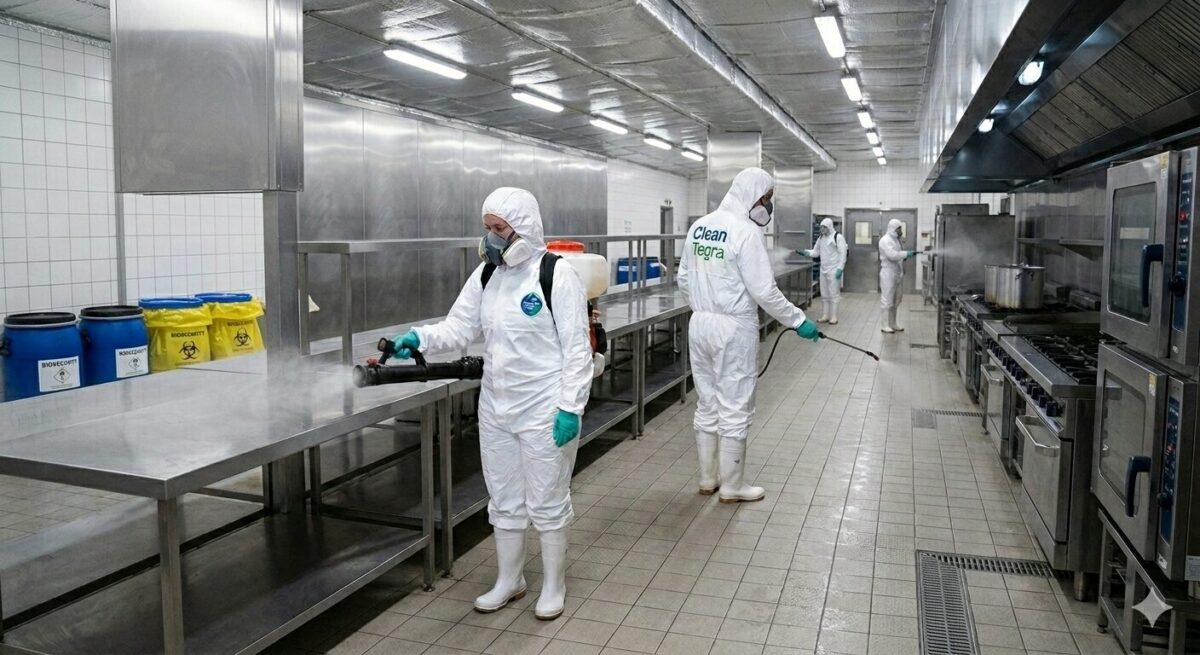
Depending on the environment, disinfectants may be applied using:
- Microfibre cloths
- Trigger sprayers
- Electrostatic sprayers
- Wipes
- Specialized equipment
Proper application ensures complete surface coverage.
Focus on High-Traffic Areas
Facilities should prioritize:
- Entrances
- Reception areas
- Shared workstations
- Meeting rooms
- Break rooms
- Washrooms
- Elevator areas
These locations typically present the greatest contamination risks.
Train Cleaning Staff Properly
Even the best disinfectant can fail if used incorrectly.
Staff should understand:
- Product instructions
- Safety procedures
- Contact times
- Proper dilution ratios
- Personal protective equipment requirements
How Professional Commercial Cleaning Services Help
Effective disinfection requires consistency, training, and expertise.
Professional commercial cleaning providers help businesses maintain higher standards through:
Structured Cleaning Programs
Cleaning schedules are customized based on:
- Occupancy levels
- Industry requirements
- Building size
- Risk factors
Approved Product Selection
Professional cleaners use products that meet Canadian regulatory standards and are suitable for specific environments.
Staff Training
Experienced cleaning teams understand proper disinfection protocols and product usage.
Quality Assurance
Routine inspections help ensure cleaning standards remain consistent over time.
Why Toronto Businesses Are Prioritizing Professional Disinfection
Organizations throughout Toronto and the GTA are increasingly investing in enhanced cleaning programs because they understand the business benefits.
These include:
- Improved employee confidence
- Better customer experiences
- Reduced absenteeism
- Stronger workplace health programs
- Enhanced reputation
- Greater peace of mind
A visibly clean facility communicates professionalism and care.
A properly disinfected facility provides an additional layer of protection that occupants may not see but certainly benefit from.
Why Choose CleanTegra Commercial Cleaning?
At CleanTegra Commercial Cleaning, we help businesses across Toronto and the GTA maintain healthier environments through professional cleaning and disinfection services.
Our team understands:
- Health Canada disinfection requirements
- High-touch surface protocols
- Industry-specific cleaning standards
- Workplace hygiene best practices
- Modern commercial cleaning technologies
We serve:
- Offices
- Medical clinics
- Retail stores
- Schools
- Warehouses
- Restaurants
- Commercial properties
- Industrial facilities
Our goal is simple: deliver cleaner, healthier, and safer environments for every client.
Conclusion
High-touch surfaces are among the most critical areas in any commercial facility. Using Health Canada approved disinfectants is not simply a best practice—it is an essential part of maintaining workplace health, safety, and professionalism.
By choosing registered disinfectants with valid DIN numbers and following proper cleaning protocols, businesses can better protect employees, customers, visitors, and their reputation.
If your business is looking for reliable commercial cleaning and disinfection services in Toronto or anywhere throughout the GTA, CleanTegra Commercial Cleaning is ready to help.
Contact CleanTegra today for a free quote and discover how our professional cleaning programs can support a healthier workplace.
1. What is a Health Canada approved disinfectant?
A Health Canada approved disinfectant is a disinfectant product that has been evaluated and authorized for use in Canada and carries a Drug Identification Number (DIN).
2. What does a DIN number mean?
A DIN indicates that Health Canada has reviewed the product for safety, quality, effectiveness, and proper use.
3. Why are high-touch surfaces important to disinfect?
High-touch surfaces are frequently contacted throughout the day and can accumulate bacteria, viruses, and other contaminants.
4. How often should high-touch surfaces be disinfected?
The frequency depends on traffic levels, but high-touch surfaces in busy facilities often require daily or multiple daily disinfection.
5. Can regular cleaning products replace disinfectants?
No. Cleaning removes dirt and debris, while disinfectants are specifically formulated to kill or deactivate harmful microorganisms.