Managing Commercial Cleaning Across Multiple Business Locations: A Practical Guide
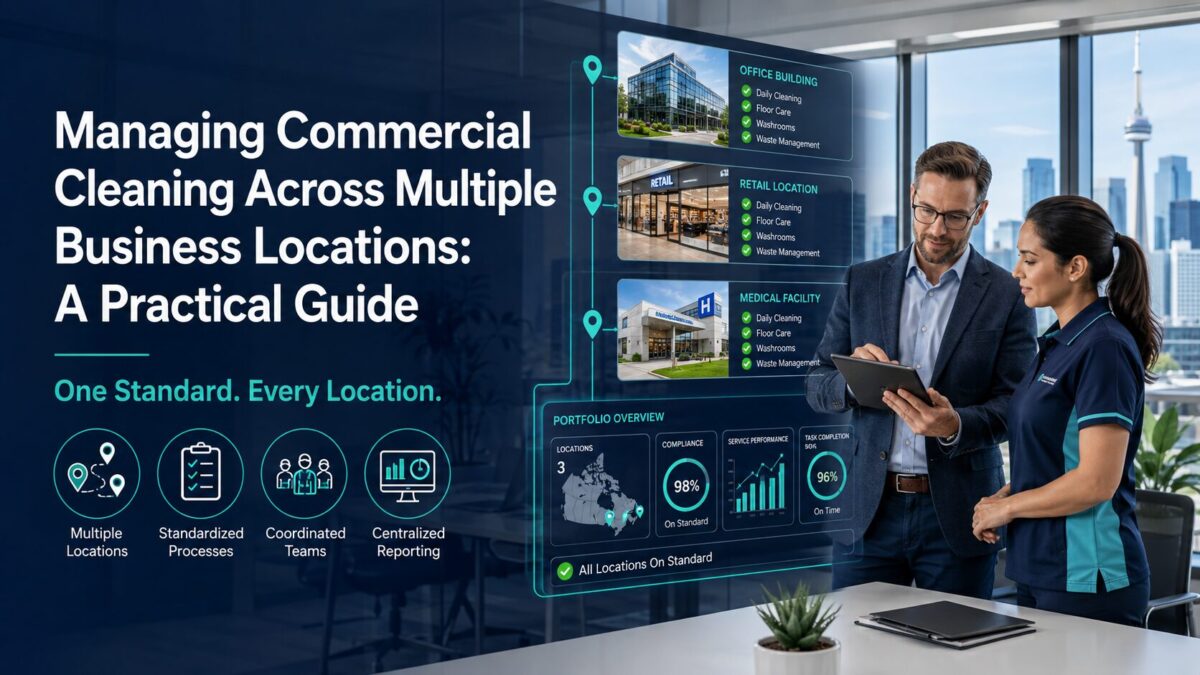
Managing cleaning across one site is straightforward enough. Managing it across several business locations is a different challenge altogether. Franchise owners, retail chains, medical groups, and regional managers all need the same result: every location should look clean, feel welcoming, and follow the same standards, no matter who is walking through the door.
That is where a structured approach to commercial cleaning multiple locations becomes essential. Without a system in place, one site may receive excellent service while another falls behind. The solution is not just more cleaning. It is better coordination, clearer expectations, and a repeatable process that works across every location.
Why multi-location cleaning needs a different approach
Cleaning one office, retail store, or clinic can often be managed with a simple checklist and a local team. Once you add more sites, the complexity increases quickly. Each location may have different hours, traffic patterns, flooring, room layouts, and service priorities. Some sites may need daily attention, while others need more specialized support.
For businesses with multiple branches or offices, consistency matters just as much as cleanliness itself. Customers and staff notice when one location is maintained differently from another. A standard approach helps protect your brand image and creates a better experience across the board.
Build a consistent schedule for every site
One of the most important parts of managing multi-location commercial cleaning is building a schedule that fits each property while keeping service standards aligned. A strong schedule removes confusion and makes it easier for teams to know what to expect.
What a strong schedule should include
- Clear service days and times for each location
- Task lists tailored to the needs of each site
- Frequency for recurring tasks such as dusting, sanitizing, and floor care
- Adjustments for seasonal traffic or special events
- Escalation steps for urgent cleaning needs
A consistent schedule does more than keep spaces tidy. It also helps reduce disruptions to employees, customers, and patients. If your business operates before or after regular hours, cleaning can be timed to avoid interruptions. If some sites have higher foot traffic, those locations can be serviced more frequently without changing the overall standard.
Use dedicated crews to improve accountability
When possible, assigning dedicated crews to specific locations can make a major difference. Teams that clean the same sites regularly become familiar with the layout, priorities, and special requirements of each property. That familiarity often leads to better efficiency and more reliable results.
Dedicated crews also support accountability. When the same team is responsible for a location, it becomes easier to track performance, identify recurring issues, and maintain a higher level of consistency. This is especially helpful in franchise cleaning services Toronto businesses often rely on, where brand standards must be maintained across several locations.
Benefits of dedicated crews
- Better knowledge of each site’s layout and needs
- More consistent service quality
- Faster issue identification and resolution
- Stronger relationships with site contacts and managers
Even when crews rotate between locations, it helps to keep team assignments organized and stable whenever possible. Familiarity builds trust, and trust makes operations smoother.
Centralize communication to avoid confusion
With several sites to manage, communication can become one of the biggest pain points. A message sent to the wrong person or a missed update about a schedule change can easily affect service quality. Centralized communication helps prevent that.
Instead of relying on scattered calls, texts, or one-off emails, create one clear communication process for all locations. This can include a single point of contact, shared service notes, and a structured way to report concerns or special requests.
Good communication practices include
- One main contact for scheduling and service updates
- Location-specific notes for special instructions
- A clear process for reporting issues after service
- Regular check-ins between cleaning teams and management
Centralized communication is especially valuable for commercial cleaning multiple locations because it keeps everyone working from the same information. That means fewer misunderstandings and faster responses when something changes.
Set clear standards for each type of location
Not all business locations need the same cleaning plan. A medical office, for example, may require more detailed attention to high-touch surfaces and waiting areas than a retail showroom. A warehouse office, meanwhile, may need more emphasis on entryways, washrooms, and shared spaces.
It helps to define standards based on the use of each site. This does not mean creating a completely different process for every location. Instead, build a core service standard and then adjust it based on the function of the space.
Examples of location-specific priorities
- Retail chains: storefront appearance, floors, fitting rooms, entrances, and customer-facing areas
- Medical groups: reception areas, touchpoints, exam rooms, and cleanliness consistency
- Franchises: brand presentation, bathrooms, staff areas, and opening-ready service
- Offices and regional hubs: workstations, meeting rooms, kitchens, and common areas
A clear set of standards helps teams know what matters most at each site and keeps service aligned with business priorities.
Use inspections and reporting to maintain quality
Even the best cleaning plan needs follow-up. Regular inspections help confirm that standards are being met, and reporting gives managers visibility across all locations. Together, these tools create a feedback loop that supports better service over time.
Inspections can be completed by supervisors, site leads, or management depending on the structure of the service. The goal is to identify missed tasks, recurring issues, and opportunities for improvement before they become bigger problems.
What to track in inspections and reports
- Completion of scheduled tasks
- Condition of high-traffic and high-touch areas
- Supply issues or restocking needs
- Notes on special requests or problem areas
- Follow-up actions and completion status
Reporting also helps business leaders compare performance across locations. If one branch consistently needs more attention in certain areas, that information can be used to adjust scheduling or staffing before service slips.
Plan for growth and changing needs
Multi-location businesses rarely stay exactly the same. New locations open, traffic patterns change, and service expectations evolve. A good cleaning strategy should be flexible enough to grow with the business.
That means building a process that can be scaled without starting from scratch each time. When a new location opens, the service model should be easy to replicate. When an existing location changes hours or expands its footprint, the cleaning plan should be simple to adjust.
A scalable system for multi-location commercial cleaning saves time for managers and reduces the risk of inconsistent service during periods of growth.
What to look for in a cleaning partner
If you are working with a professional cleaning provider, choose one that understands the demands of managing several sites. The right partner should be organized, responsive, and able to support consistent service across different locations.
Helpful qualities in a provider
- Experience with commercial cleaning multiple locations
- Clear communication and reporting processes
- Flexible scheduling options
- Ability to tailor service by site type
- Systems for inspections and quality control
It is also helpful when a provider can coordinate with regional managers, franchise owners, or property teams without creating extra administrative work. The goal is to make service easier to manage, not harder.
Conclusion: consistency is the key to success
Managing cleaning across multiple business locations takes planning, communication, and reliable follow-through. When schedules are consistent, crews are accountable, communication is centralized, and inspections are routine, the entire operation runs more smoothly.
For businesses that depend on a strong public image and dependable site standards, a structured approach to commercial cleaning multiple locations can make a real difference. If you are looking to simplify operations and improve consistency across your sites, it may be time to review your current process and explore a better system for ongoing support.
With the right plan in place, multi-site cleaning becomes less about constant problem-solving and more about dependable results.