Rainy Season Entryway Management: Matting Strategies to Prevent Slip-and-Fall Lawsuits
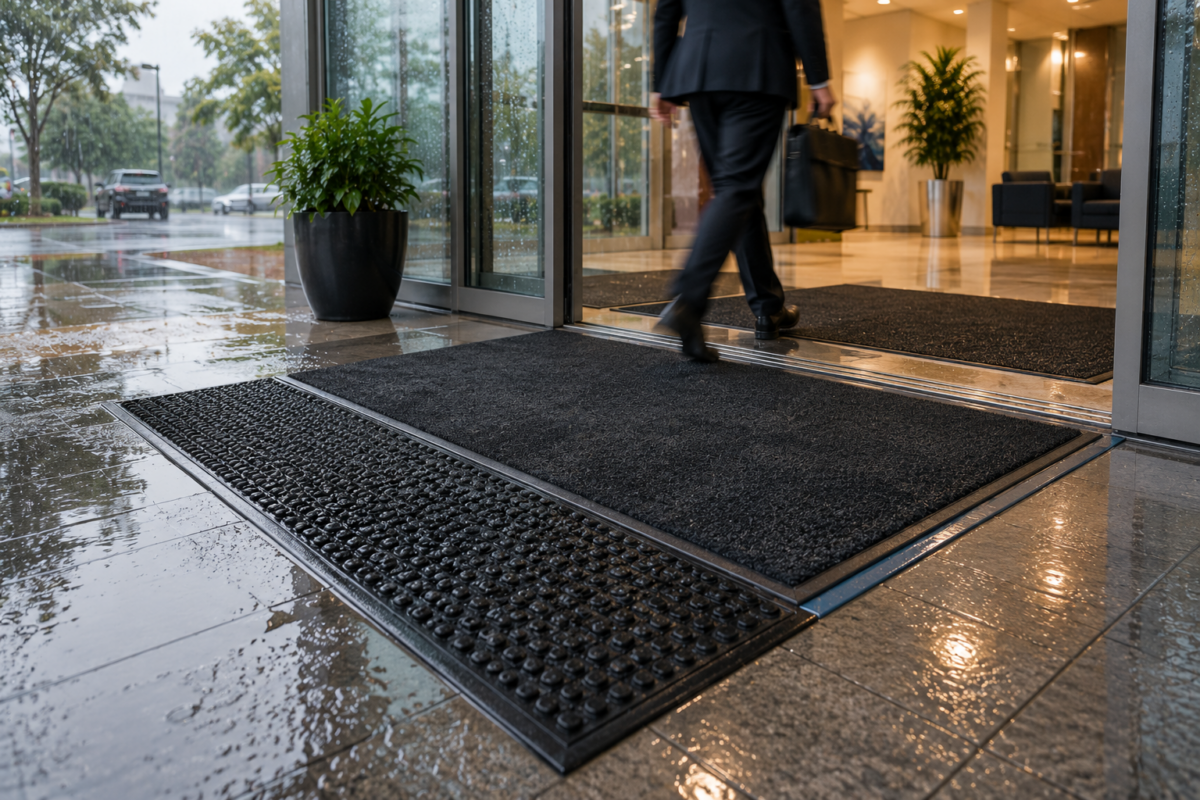
Rainy weather can create serious entryway challenges for commercial properties. Water tracked in from sidewalks, parking lots, and transit stops can quickly turn an office lobby, hallway, or reception area into a slip hazard. For property managers and business owners, the goal is not just to keep floors looking clean—it is to support safer movement, reduce moisture buildup, and strengthen daily slip and fall prevention practices.
Effective rainy season floor maintenance begins at the entrance. With the right combination of entrance matting, frequent inspection, and fast response to moisture, businesses can lower risk and maintain a more professional environment for staff, clients, and visitors. Whether you manage a corporate office, healthcare facility, retail space, or public building, a thoughtful entryway plan can make a meaningful difference.
Why rainy season entryways become high-risk areas
During wet weather, entryways often receive the highest volume of tracked-in water and debris. Shoes, umbrellas, carts, and wheeled equipment can all introduce moisture into the building. Smooth flooring surfaces such as tile, polished concrete, or vinyl can become especially hazardous when water is not addressed quickly.
Common problem areas include:
- Front doors and vestibules
- Reception desks and lobby walkways
- Elevator lobbies and corridor intersections
- Side entrances used by staff or deliveries
- Shared public building entrances during peak traffic periods
Because these areas see constant foot traffic, even a small amount of standing water can create unsafe conditions. That is why commercial wet floor maintenance should be planned, not improvised.
Build a matting system that supports safer movement
A strong entrance matting strategy does more than place a single mat at the door. It creates a layered system that helps capture moisture, remove grit, and slow the spread of water deeper into the building. For businesses seeking commercial entryway mat cleaning Toronto services or broader support across the GTA, matting should be treated as part of an ongoing safety process.
1. Use layered matting zones
One mat is rarely enough during rainy season. A better setup usually includes:
- Exterior scraper mats to remove mud, leaves, and debris before guests enter
- Interior absorbent mats to collect water and reduce slipping risk
- Long-run mats for high-traffic lobbies and corridors where moisture travels farther
This layered approach helps support public building slip prevention by reducing the amount of water that reaches walking surfaces.
2. Match mat size to traffic volume
Small mats can become saturated quickly in busy buildings. If people must step off the mat before their shoes are dry, the risk of slips remains high. Mats should be long enough to allow multiple steps, especially in office lobby environments and busy entrances where traffic is constant.
3. Choose mats designed for wet conditions
Not all mats perform the same way. For rainy season conditions, look for absorbent mats with strong backing that stay in place and help control moisture. Mats should lie flat, not curl at the edges, and should be easy to clean or replace as conditions change.
Pair matting with reliable wet floor management
Mats are only one part of the solution. A complete wet floor management plan includes monitoring, drying, signage, and quick response procedures when water reaches the floor. Without these steps, mats can become overloaded and stop performing effectively.
Inspect entry points throughout the day
During wet weather, entry areas should be checked regularly. Watch for:
- Saturated mats that no longer absorb moisture
- Water pooling near door thresholds
- Dirty footprints extending beyond the mat area
- Slippery residue from salt, grit, or outdoor debris
Routine inspections are especially important in GTA facilities where weather can shift quickly and foot traffic may spike unexpectedly.
Use prompt lobby floor drying services when needed
If water spreads past the matting zone, drying should happen right away. Lobby floor drying services may include mopping, microfiber drying, and targeted extraction in problem areas. The faster moisture is removed, the easier it is to maintain safe walking conditions.
In larger buildings, entryway water extraction Toronto support may be useful during heavy rain or slushy conditions, particularly when drainage is limited or traffic is frequent.
Place wet floor signage where it is visible
Clear signage can remind people to slow down and use caution. Signs should be placed where they are easily seen before someone steps onto a damp surface. They should not replace cleaning or drying efforts, but they are a helpful part of slip and fall prevention.
Keep mats effective with routine cleaning and care
Even high-quality mats lose effectiveness if they are not cleaned and maintained. Dirt, moisture, and salt can reduce absorbency and create odors or stains. Regular mat care supports both appearance and safety.
Include mat care in janitorial routines
Commercial floor safety protocols should include a clear schedule for shaking out, vacuuming, washing, and rotating mats as needed. In buildings with constant traffic, mat care may need to happen more than once per day during wet weather.
Janitorial teams should also watch for mats that have shifted out of place or become worn at the edges. A mat that bunches up or slides can create a new hazard rather than preventing one.
Coordinate mat cleaning with floor maintenance
If surrounding floors are cleaned but mats are not, moisture and debris can be reintroduced immediately. That is why commercial floor safety works best when floor cleaning, mat care, and entryway checks happen together. This is especially true in office lobbies, healthcare settings, and public-facing entrances where first impressions and safety both matter.
Adapt rainy season floor maintenance to your facility type
Different buildings face different entryway challenges. A one-size-fits-all approach is rarely enough.
Corporate offices
Office buildings often see concentrated morning traffic and lunch-hour movement. A clean, dry entrance supports a professional image while helping reduce slip risk for employees and guests. Commercial wet floor maintenance should focus on reception areas, elevator banks, and side entrances used by staff.
Healthcare and childcare facilities
These environments require extra attention because vulnerable visitors may move more slowly or with assistance. Entrances should remain dry, uncluttered, and easy to navigate. Matting, drying, and routine inspections should be part of the daily workflow.
Warehouses and industrial spaces
Large doors, delivery traffic, and outdoor-to-indoor movement can bring in a great deal of moisture and debris. Durable entrance mats, frequent cleaning, and fast response to puddles help support safer paths for workers and visitors.
Fitness centers and recreation spaces
These sites often experience wet footwear even outside rainy weather, which makes entrance control especially important. Mats should be reinforced with regular cleaning and maintenance so they continue to absorb moisture effectively.
Practical steps for a safer rainy season entryway
If you want a simple checklist for rainy weather readiness, start here:
- Install layered entrance mats sized for real traffic patterns
- Inspect mats and floors throughout the day
- Dry visible moisture immediately
- Keep wet floor signage ready for use
- Clean and rotate mats regularly
- Review entryway water extraction and janitorial response procedures before heavy rain begins
These steps can help reduce avoidable hazards and support a more consistent safety standard during the wettest months of the year.
Safer entryways support safer businesses
Rainy weather does not have to create constant slip concerns. With smart entrance matting, dependable wet floor management, and routine janitorial care, businesses can improve safety at the point where risk begins: the entryway. For organizations in Toronto and the GTA, a proactive approach to Commercial floor safety protocols can help keep lobbies cleaner, drier, and more welcoming through the rainy season.
If your building needs help with Commercial entryway mat cleaning Toronto, lobby floor drying services, or broader rainy season floor maintenance, consider partnering with a commercial cleaning provider that can tailor a plan to your facility’s traffic patterns and safety needs. A cleaner, drier entrance is not just more professional—it is a practical step toward better slip and fall prevention.