What Should Be Included in a Commercial Cleaning Contract? A Practical Checklist
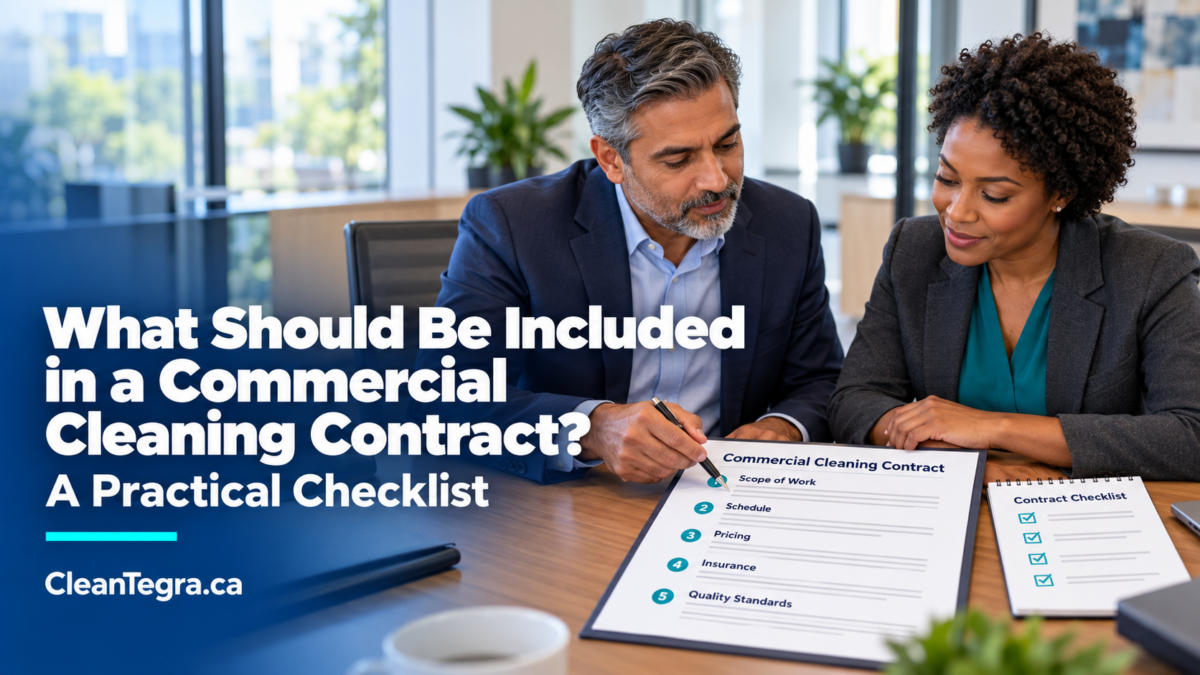
A well-written commercial cleaning contract helps both the cleaning provider and the customer understand exactly what is expected. Whether you manage an office, retail space, facility, or multi-unit property, a clear agreement can reduce confusion, support consistent service, and make it easier to address issues before they grow into bigger problems.
If you are reviewing an office cleaning service agreement or putting one together for the first time, it helps to know what details should be included. A good contract is more than a simple price sheet. It should define the work, the schedule, the standards, and the responsibilities of each party.
Why a Commercial Cleaning Contract Matters
A commercial cleaning agreement creates a shared understanding between the client and the cleaning company. It helps avoid missed tasks, unclear billing, and disputes about service expectations. For many businesses, it also becomes a helpful reference document when operations change, staffing shifts, or additional services are needed.
From routine office maintenance to specialized facility care, a contract gives structure to the relationship. It can also make it easier to compare providers, because you can review each proposal using the same janitorial contract checklist.
Key Elements to Include in a Commercial Cleaning Contract
1. Contact Information for Both Parties
Start with the basic details for the client and the cleaning provider. Include the legal business names, primary contacts, addresses, phone numbers, and email addresses. This helps ensure the agreement is easy to follow and that the right people can be reached if questions come up.
2. Clear Description of the Services
The most important part of any contract is the commercial cleaning scope of work. This section should explain exactly what tasks are included. Be specific rather than general.
For example, instead of simply saying “office cleaning,” list the actual duties such as:
- Emptying waste bins and replacing liners
- Dusting desks, ledges, and reachable surfaces
- Cleaning and disinfecting high-touch points
- Vacuuming carpets and cleaning hard floors
- Sanitizing restrooms and replenishing supplies
- Cleaning break rooms, kitchens, and shared areas
If specialized cleaning is included, such as floor waxing, carpet care, construction cleanup, or medical facility cleaning, those items should be listed separately so there is no confusion about what is covered.
3. Areas Included and Excluded
It is helpful to state which rooms, zones, or surfaces are part of the contract. A business may want daily service in common areas but only weekly service in storage rooms or private offices. If some areas are not included, that should also be written clearly.
This is especially useful for larger sites like condo buildings, apartment properties, schools, daycares, gyms, restaurants, and industrial spaces where cleaning needs can vary widely.
4. Cleaning Schedule and Frequency
The agreement should explain when cleaning will happen and how often. Include the days of service, start times, estimated duration, and whether the work is daily, weekly, biweekly, or on another schedule.
If the site requires service outside normal business hours, note that in the contract. This is often important for office spaces, medical facilities, fitness centers, and restaurant environments where access and timing can affect daily operations.
5. Service Standards and Quality Expectations
Good contracts define what successful service looks like. This does not need to be overly technical, but it should describe the expected standard. For example, the agreement might state that surfaces should be cleaned thoroughly, supplies should be restocked as needed, and visible debris should be removed from service areas.
Quality expectations can also include inspection methods, reporting procedures, or steps for correcting missed tasks. This helps support consistent results over time.
6. Supplies, Equipment, and Consumables
Be sure the contract clarifies who provides cleaning products, paper goods, liners, hand soap, sanitizer, and equipment. Some clients prefer the cleaning provider to supply everything, while others want to supply certain items themselves.
When this is spelled out in advance, it is easier to avoid delays and misunderstandings. If eco-friendly products, floor machines, or specialized tools are needed, those details can be included here as well.
7. Pricing and Billing Terms
The contract should explain how service is billed. This may include monthly pricing, per-visit charges, hourly rates, or custom pricing based on the site. Even if pricing is not listed publicly, the agreement should still state how invoices are issued and when payment is due.
It is also wise to include information about extra services. For example, if a client requests one-time deep cleaning, post-construction cleanup, or carpet extraction outside the normal scope, the process for approving and billing that work should be clear.
8. Term of the Agreement and Renewal Terms
Include the start date, end date, and renewal terms if applicable. Some agreements continue month to month after the initial term, while others renew automatically unless cancelled by either party. The important thing is that both sides understand how long the contract lasts and how it can be extended or ended.
9. Access, Security, and Key Handling
Commercial cleaning often requires access to secure buildings or restricted areas. A contract should explain how entry will be managed, who holds keys or codes, and what steps are expected to protect the property.
If alarm systems, fobs, elevators, or special instructions are involved, they should be noted in the agreement. This is especially important for office buildings, medical sites, schools, and condo properties where security procedures matter.
10. Communication and Issue Resolution
A strong contract should explain how clients can request changes, report concerns, or ask for additional service. It is helpful to include a primary contact for each side and a simple process for handling complaints or service adjustments.
Clear communication makes it easier to maintain consistent results and respond quickly when needs change.
11. Cancellation and Termination Terms
Every service agreement should explain how either party can end the contract. This may include required notice periods, reasons for termination, and what happens to outstanding invoices or scheduled service dates.
Having this information in writing protects both parties and helps keep the relationship professional, even if the agreement ends.
A Simple Janitorial Contract Checklist
If you want a quick way to review an agreement, use this janitorial contract checklist:
- Names and contact information for both parties
- Detailed cleaning scope of work
- Included and excluded areas
- Cleaning frequency and schedule
- Supplies and equipment responsibilities
- Pricing and invoicing terms
- Quality standards and inspection process
- Security and access instructions
- Additional service request process
- Cancellation and renewal terms
Using a checklist like this can help you compare proposals more effectively and choose a provider that fits your site’s needs.
Questions to Ask Before Signing
Before you sign any cleaning agreement, ask a few practical questions:
- What exactly is included in the regular service?
- Are restocking and supply costs included?
- How are special requests handled?
- What happens if service is missed or needs to be corrected?
- How much notice is needed for schedule changes?
These questions can help you avoid surprises and make sure the contract reflects your actual needs.
Final Thoughts
A strong commercial cleaning contract should be clear, practical, and easy to understand. It should define the commercial cleaning scope of work, set service expectations, explain schedules and billing, and outline how communication will work. Whether you need an office cleaning service agreement or a broader facility plan, taking time to review the details now can save time later.
If you are looking for professional commercial cleaning support in Toronto, Cleantegra Commercial Cleaning Service can help you plan a service approach that fits your space and your schedule. Contact us to discuss your cleaning needs and request a service plan that is clear from the start.
Cleantegra Commercial Cleaning Service
10 Milner Business Crt., Suite 814, Toronto, ON M1B 3C6
Phone: (647) 693-9849
Email: info@cleantegra.ca
Web: www.cleantegra.ca