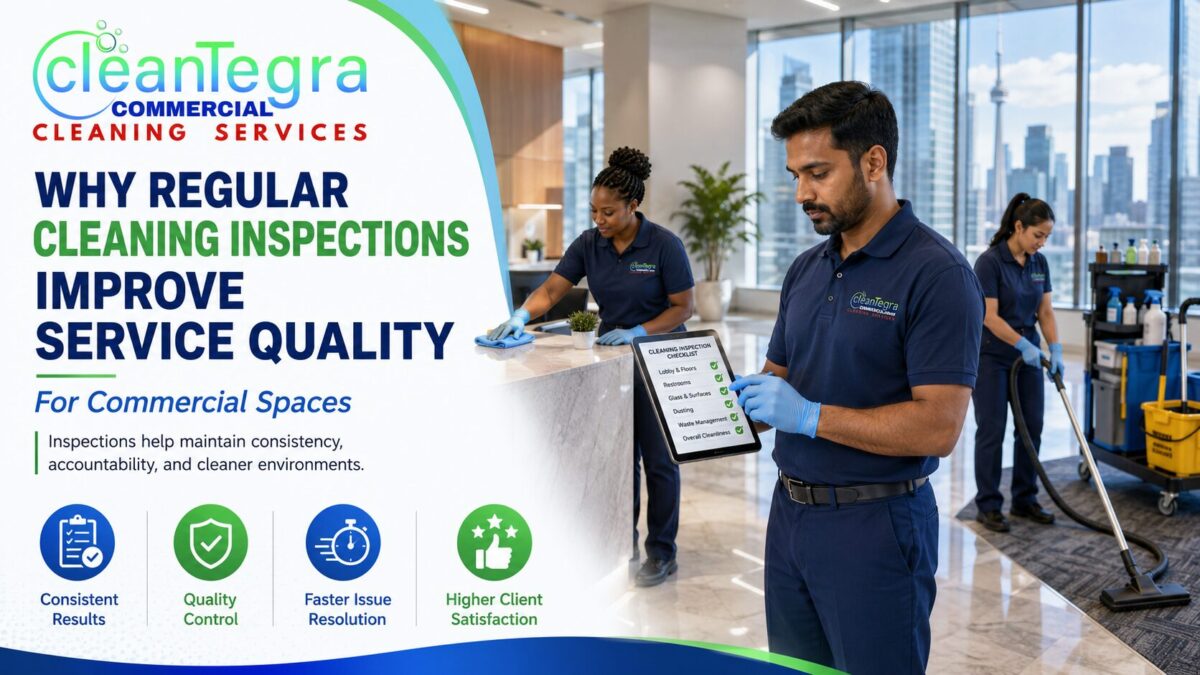
Why Regular Cleaning Inspections Improve Service Quality for Commercial Spaces
In commercial environments, cleaning quality is not just about appearances. It affects how people experience a space, how confidently a business presents itself, and how consistently service standards are maintained over time. That is why regular cleaning inspections are such an important part of a reliable cleaning program.
For facility managers and businesses reviewing their current provider, inspections create a clear process for measuring performance, identifying missed tasks, and keeping service aligned with expectations. They also support stronger communication between the client and the cleaning team, which helps prevent small issues from turning into recurring problems.
What regular cleaning inspections actually do
Regular inspections are structured checks used to review how well cleaning tasks are being completed. They may be scheduled daily, weekly, or monthly depending on the type of facility and service plan. The goal is simple: confirm that the work matches the agreed standard and that any concerns are addressed quickly.
When inspections are done consistently, they become a practical form of cleaning quality control. Instead of relying on assumptions, managers can use clear observations to evaluate service quality and make informed adjustments.
Common areas reviewed during inspections
- Floors, entryways, and high-traffic areas
- Washrooms and touchpoint cleaning
- Dusting and surface care
- Waste removal and disposal practices
- Supply restocking and presentation
- Special areas such as meeting rooms, kitchens, or shared spaces
How inspections improve service quality
Cleaning services work best when expectations are clear and performance is reviewed regularly. A good inspection process helps improve service quality in several ways.
1. It creates consistency
Commercial properties often have many moving parts. Different shifts, busy periods, and changing traffic levels can affect cleaning results. A consistent inspection routine helps ensure that standards stay steady, even when conditions change.
This is especially important for businesses with multiple locations, shared spaces, or high-use areas. Regular review makes it easier to maintain the same level of service across the board.
2. It identifies issues early
When cleaning concerns are caught early, they are usually easier to correct. An overlooked floor area, a missed detail in a washroom, or a recurring problem in a common space can often be resolved before it affects the overall appearance of the facility.
Early identification also helps reduce repeat issues. If the same item keeps appearing on the inspection report, it may point to a training need, a scheduling adjustment, or a better process.
3. It strengthens accountability
Inspections give everyone involved a clearer understanding of what “good service” looks like. That shared standard helps create accountability without unnecessary guesswork.
For cleaning teams, this means knowing what is being measured and where attention is needed. For managers, it means having a practical way to monitor whether the service is meeting expectations.
4. It improves communication
Strong service depends on clear communication. Inspection results make it easier to discuss priorities, request changes, and confirm that concerns have been resolved. This is especially useful for businesses changing cleaning providers, because it helps establish a transparent service process from the beginning.
When expectations are documented and reviewed, there is less room for misunderstanding and a better chance of long-term satisfaction.
The role of a janitorial inspection checklist
A well-organized janitorial inspection checklist is one of the most useful tools in any cleaning program. It keeps inspections focused and ensures that the same important areas are reviewed every time.
Rather than relying on a general impression, a checklist allows managers to check specific items in a structured way. This makes the inspection process more consistent and easier to track over time.
A practical checklist may include
- Are floors clean and free of visible debris?
- Are surfaces dusted and presentable?
- Are washrooms stocked and sanitized?
- Are high-touch points cleaned properly?
- Are waste containers emptied on schedule?
- Are shared areas neat and ready for use?
For larger facilities, checklists can be customized by zone or department so that inspections remain relevant to each space. This helps ensure that cleaning performance monitoring is not only thorough, but also practical.
Why cleaning performance monitoring matters
Cleaning performance monitoring turns service quality into something measurable and manageable. Instead of treating cleaning as a background task, it becomes an ongoing process that can be reviewed, improved, and maintained.
This matters because service quality can vary when there is no regular review. Monitoring helps reveal patterns, such as areas that require more frequent attention or tasks that need a different method. It also helps businesses understand whether a provider is delivering the level of service they expected.
Benefits of ongoing monitoring
- Better service consistency
- Faster response to missed items
- Improved transparency between client and provider
- More efficient use of cleaning resources
- Stronger support for changing business needs
Why this matters when changing cleaning providers
Businesses switching providers often want a cleaner, more dependable experience. One of the best ways to support that transition is to build inspections into the service structure from the start.
Regular inspections help establish expectations early and make it easier to confirm that the new provider is meeting them. They also provide a useful reference point for future improvements, especially in busy environments where standards need to stay high day after day.
For facility managers, this means fewer surprises and more control over the outcome. For business owners, it means greater confidence that the space is being maintained properly.
How regular inspections support a better workplace
A clean facility does more than look good. It helps create a more organized, professional, and welcoming environment for employees, visitors, and customers. Regular inspections support that outcome by keeping standards visible and service quality on track.
They also help cleaning teams stay focused on what matters most: delivering dependable results, responding to feedback, and maintaining a high level of care in every visit.
Final thoughts
Regular cleaning inspections are a practical and effective way to improve service quality in commercial spaces. They support cleaning quality control, strengthen communication, and make it easier to monitor performance over time. With the help of a clear janitorial inspection checklist and consistent cleaning performance monitoring, businesses can maintain higher standards and address issues before they grow.
If you are reviewing your current cleaning arrangement or looking for a more dependable service process, regular inspections are a smart place to start. They provide the structure needed to keep your space looking professional and operating smoothly.
For businesses in the Greater Toronto Area and Southern Ontario, a cleaner, more consistent result begins with the right process. If you are ready to improve service quality, consider a cleaning partner that values clear standards, regular review, and dependable results.