High-Touch Surfaces Your Office Cleaning Plan Should Include
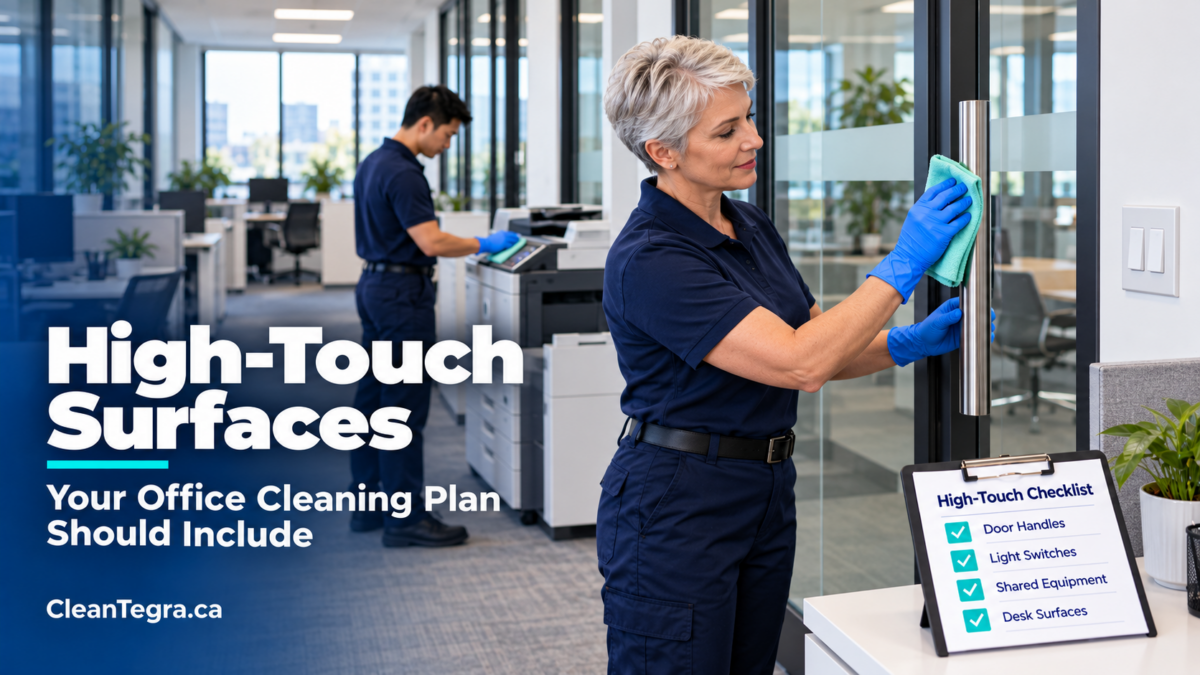
A well-planned cleaning routine does more than make an office look tidy. It helps maintain a healthier, more professional workplace by focusing on the areas people touch most often throughout the day. If your current schedule only covers visible dust and floors, you may be missing some of the most important spots. A smart plan for high touch surface cleaning helps reduce the spread of germs and keeps shared spaces cleaner between deep cleans.
For offices in Toronto and across the GTA, the goal is simple: build a cleaning routine that targets the surfaces employees, visitors, and clients use repeatedly. Whether you manage a small office suite or a larger commercial space, including the right details in your workplace surface cleaning plan can make a noticeable difference in comfort, appearance, and day-to-day hygiene.
What counts as a high-touch surface?
High-touch surfaces are the items and fixtures people handle frequently, sometimes without thinking about it. These are the areas most likely to collect fingerprints, dirt, and everyday contaminants. Because many hands touch them throughout the day, they should be cleaned more often than low-contact surfaces.
In most offices, high-touch points include both personal work areas and shared spaces. A complete commercial cleaning checklist GTA businesses can rely on should account for both.
Key high-touch surfaces to include in your office cleaning plan
1. Door handles and push plates
Doors are one of the most frequently used parts of any workplace. Entry doors, office doors, washroom doors, and meeting room doors all need regular attention. Door handles, push plates, and locks should be cleaned consistently because they are touched by staff, visitors, and service providers throughout the day.
2. Light switches and control panels
Light switches are often overlooked, yet they are used repeatedly in hallways, private offices, and common areas. The same is true for thermostat controls, elevator buttons, and other wall-mounted panels. These surfaces should be included in routine high touch surface cleaning to help maintain a cleaner shared environment.
3. Desks, tabletops, and reception counters
Workstations and reception areas are central to how an office functions. Desks, conference tables, meeting room surfaces, and front counters can quickly gather dust, crumbs, fingerprints, and smudges. Regular cleaning of these areas helps keep the workplace looking organized and professional.
4. Shared office equipment
Printers, copiers, scanners, fax machines, and shared keyboards are used by multiple people, making them important targets in any cleaning plan. Because these items are handled throughout the day, they should be cleaned carefully and as part of a routine workplace surface cleaning schedule.
5. Elevator buttons and handrails
If your building has elevators, the buttons and handrails should be treated as high-priority touch points. Hallway railings, stair rails, and other support surfaces are also commonly touched and should be included in a thorough cleaning routine.
6. Break room surfaces and appliances
Shared kitchens and staff break rooms are busy areas. Refrigerator handles, microwave buttons, coffee machine controls, cabinet pulls, table tops, and sink faucets are all touched often and should be cleaned regularly. Since these spaces are used for meals and breaks, keeping them fresh and orderly also improves employee comfort.
7. Restroom fixtures and touch points
Restrooms require careful attention because of the number of surfaces people contact in a short amount of time. Faucets, flush handles, soap dispensers, paper towel dispensers, stall locks, and door hardware all belong on your cleaning checklist. For businesses looking for office disinfection Toronto services, restroom cleaning is usually one of the most important priorities.
8. Phones and communication devices
Desk phones, shared conference phones, and intercom panels can be overlooked during routine cleaning. Because these items are used frequently and often held close to the face, they should be cleaned with care as part of your office maintenance plan.
9. Copy room and supply area touch points
Supply closets, storage room handles, shared carts, drawer pulls, and shelving edges may not seem like major contact areas, but they are used often enough to matter. Including them in your schedule helps create a more complete cleaning system rather than focusing only on the most visible spaces.
10. Shared seating and armrests
Waiting room chairs, conference chairs, visitor seating, and lounge furniture all receive steady use. Armrests, chair backs, and table edges should be cleaned regularly, especially in reception areas where clients and guests are welcomed.
Why high-touch cleaning matters in the workplace
Office cleaning is not only about appearance. A cleaner workspace can support better comfort, better first impressions, and a more organized routine for employees and visitors. When high-contact areas are neglected, even a clean-looking office can feel untidy.
Including these surfaces in your schedule also helps your cleaning team work more efficiently. Instead of treating every task the same, they can focus on the most used items first and make sure key areas receive the right level of attention.
How often should these surfaces be cleaned?
The right frequency depends on the size of the office, the number of people in the space, and how much traffic each area receives. In busy workplaces, some surfaces may need attention daily, while others may be cleaned on a set weekly schedule. Shared spaces, restrooms, and reception areas usually need the most frequent care.
A practical approach is to build your cleaning plan around use, not just appearance. The more people touch a surface, the more often it should be cleaned. This is especially true in offices that host clients, run meetings, or have employees moving between desks and shared rooms throughout the day.
What to include in a commercial cleaning checklist GTA offices can use
A strong checklist should be easy to follow and specific enough to avoid missed tasks. Here are a few items that often belong on a commercial cleaning checklist GTA businesses can adapt for their own workplace:
- Clean and disinfect door handles, push plates, and locks
- Wipe light switches, thermostats, and control panels
- Sanitize desks, counters, tables, and shared work surfaces
- Clean printers, phones, keyboards, and other shared equipment
- Wipe elevator buttons, railings, and hand contact points
- Clean break room counters, appliance handles, and sink fixtures
- Clean restroom touch points, including faucets and dispensers
- Wipe chairs, armrests, and reception seating
- Clean storage room handles, carts, and supply area touch points
How professional cleaning support helps
Many offices can handle basic upkeep in-house, but a professional cleaning plan brings consistency. A trained team can follow a detailed schedule, cover overlooked surfaces, and maintain standards across all common areas. That is especially helpful in busy workplaces where staff are already focused on their own daily responsibilities.
Professional support can also be adapted to different property types. For example, offices may need one type of routine care, while other facilities such as medical spaces, schools, gyms, restaurants, or condo buildings require more specialized cleaning attention. The right service plan should reflect the way your space is used.
Building a better office cleaning routine
If your current plan focuses mainly on floors and visible surfaces, it may be time to expand it. High-touch areas are some of the most important parts of a workplace cleaning strategy, and they should be treated as a standard part of maintenance, not an afterthought.
By including door handles, desks, switches, shared equipment, break room fixtures, and restroom touch points, you create a more complete approach to office care. That kind of routine helps keep the workplace more presentable and more comfortable for everyone who enters the space.
If you are reviewing or updating your office cleaning plan in Toronto or the GTA, Cleantegra Commercial Cleaning Service can help support a cleaner, more organized workspace with a plan built around your needs. To learn more about office cleaning and related commercial cleaning services, visit www.cleantegra.ca or contact the team at (647) 693-9849.